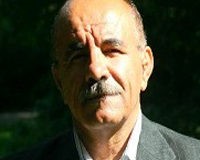
From Wounds to Renewal: A Story of Humanity, the Land, and Freedom in Rojava – Abbas Mansouran
“The Phantom Pain of Rojava” — a profoundly moving, beautiful, and tragic work, yet at the same time one filled with deep conviction and steely hope.
Maryam Ebrahimi’s film cannot be regarded merely as a conventional account of war, wounds, memory, and courage. At its deepest and most basic levels, the work poses a question about existence itself: about resistance in a land that is home to more than ten nationalities and ethnic and religious communities — Kurds, Arabs, Assyrians, Armenians, Chaldeans, Circassians, Yazidis, and others — and to nearly four million people.
The question posed by the film is this: How does a human being recreate themselves after burying parts of their own body and soul? Where do the driving force and philosophy behind this epic lie? How does one continue to live and give birth to hope while bearing the wounds of a magnificent resistance? And how, from within a soil that has witnessed the terrifying face of death with its own eyes, can the possibility of renewal be created once again, sincerely and authentically?
In this work, Maryam Ebrahimi does not confine herself to documenting the stark facts of war and its aftermath. She brings before us the resonant voice and vivid image of a historic uprising — an uprising in which women stand at the center, yet whose horizons as well as aspirations go beyond the limits of gender and politics toward a fundamental question about the human being as part of nature, as an embodiment of freedom, and about humanity’s bond and link with the land.
Behind this historical documentation stands a chain of people and immense, quiet efforts, each of which has played an important role in shaping this philosophy and this lasting human paradigm.
Heval Rojda Rojhelat was among the genuine supporters and those who helped pave the way for this project; someone who, like gushing springs, played an essential role in creating possibilities and opening paths for the realization of this historical document. She stood steadfastly beside this effort until the end — and continues to do so. How many people involved in creating a great work are rarely seen within the camera’s frame, yet without their presence, suffering, trust, and solidarity, the frame itself could never have come into being.
Even during the darkest and most agonizing days of war, some people connected the camera and the act of storytelling toward the trembling reality of human suffering. Dr. Roni Javanrud was among the most prominent of them — a human being who joined those devoted souls and, during the days when white phosphorus rained down upon Serêkaniyê, Girê Spî, and the surrounding villages, stood steadfastly beside us and the wounded, fighting to save human lives. His presence is living testimony to the truth that, amid the horrors of war, preserving human life and tending to wounds is itself a noble form of resistance: standing against a logic that seeks to turn the human body, along with the earth itself, into scenes of destruction and devastation.
And in those same days of fire and death, William from Switzerland was there shoulder to shoulder with us — a compassionate human being who shared the suffering of those in pain, helped us deliver medicines, and, to report and document the truth and bring it before world public opinion, entered the inferno with his camera. His presence embodied human compassion and solidarity in their universal meaning — a solidarity that goes beyond the boundaries of geography, language, and nationality, recognizing human suffering as the common suffering of humankind.
In the formation of this historical chronicle, people such as Mazdak Azar (Alireza Askari) played an important role in developing and cultivating the idea of a movement to document this reality — an effort whose first steps were taken in Sweden so that a fragmented experience saturated with pain could be transformed into an enduring historical narrative.
This search ultimately converged with Maryam Ebrahimi’s profound vision and lived experience. This woman had experienced war herself and a childhood scarred by war with every cell of her being. Thus, when she took the camera into the field, she understood the deep meaning of wounds, fear, loss, and perseverance not simply from behind the lens, but through her own soul.
Maryam was not simply seeking to document a war event. She was searching for an organic bond between the human being and the land, between wounds and memory, between woman and life, and between resistance and the possibility of a future. And when she took the camera in her hands, she did not turn it into an instrument for observing from afar. For her, the camera became a means of drawing closer, listening, living, and bearing witness.
The result of this choice was nearly five years of persistent and extraordinary work documenting a truth which had to remain alive forever — amid the deafening sound of war, within the dry statistics of casualties, and among the bitter images of Kobane’s destruction.
This is perhaps one of the film’s most singular qualities: beneath reconnaissance drones and bombers searching house by house for Sorxwin and wounded commanders, the camera moves closer and closer — toward wounded bodies, eyes exhausted by sleeplessness, meaningful silences, and hands that, despite profound injuries, continue to work and create.
People such as comrades Sorxwin, Zarin, Rojda, Fedakar, and others have passed through the gateway of death, losing hands, legs, speech, or sight, yet they continue to think of life and the maintenance of struggle — while enemy drones search for them house by house.
The women who emerge in this magnificent narrative are no longer the silent and neglected objects of history. They themselves have become conscious agents of history. These women have stood against brutality, occupation, and the logic of death in defense of human dignity, the existence of the oppressed, and the rights of those whose rights have been denied.
Figures such as Heval Fatemeh Rojhelat (Sorxwin), Heval Fedakar, Zarin, Rojda, and other figures of resistance are not simply heroes of a military struggle. They are luminous signs of resistance: the possibility of another way of living, of more humane relationships, and of a globe that is worthy, necessary, and pure.
The presence of Comrade Fedakar carries a strong and disruptive meaning here. The world is not to be imprisoned once again within the worn-out binary of woman and man. The significance of his presence — as a man who has himself lost both legs and stands beside wounded women — lies precisely in breaking down these artificial walls and opening a horizon in which the question is not one of conflict between genders, but of human liberation and the restoration of humanity’s severed bond with nature and the earth.
He is a man amid the mountains, among women fighters and the wounded; a man who today, alongside them, thinks of returning life to the soil — of olives, flowers, plants, and the return of life to a land wounded by war. His presence reminds us that human liberation cannot be reduced to the liberation of one gender from another. The question is the liberation of interpersonal relationships from domination and the restoration of humanity’s connection with the earth.
Perhaps it is precisely here that the House of the Wounded and the Confederation of the Wounded, together with commanders such as Comrade Sorxwin (Fatemeh), Newroz, and other dear comrades in the process of liberating Rojava and Kobane, acquire a meaning that reaches beyond material geography.
This house is the living embodiment of a human commune of communards — a space in which one can perceive a trace of leadership and mutual responsibility in humanity’s earliest communes, before property, hierarchy, and relations of control transformed the relationship between human beings and among humanity and nature, and before the exploitation of human beings and nature became established social relations. Here, wounds, disability, gender, and conventional social boundaries lose their former authority. What remains is the human being and our common need for life and dignity.
Women who have lost an eye, a hand, or a leg in this terrible struggle for liberation, equality, and Woman, Life, Freedom live within their wounded bodies while simultaneously recreating life outside the body — restoring the soil, cultivating olives, growing plants, and keeping the ecosystem alive.
It is as though their wounded bodies and the wounded, plowed earth of Rojava are two manifestations of a single wound. And both cry out the same answer:
Healing, Continuity, and Renewal.
It is here that one of the film’s most powerful images emerges: women whose weapons still lie beside them. At the same time, the threatening shadow of enemy drones hangs over the sky above, calmly and with steady determination casting earth over the body of a fallen comrade.
The hand that scatters soil over the body of a fallen comrade so that an olive sapling may rise from it is the same hand that plants olives and returns life to the earth.
This soil is no longer only a cemetery of death; it is a cradle of birth and renewal, like Mesopotamia — the land between the rivers.
And yet, the film’s fundamental question continues to hover before our eyes:
What is the driving force behind this immense resistance?
Is what we witness merely the product of the emotions of war? Can it be understood within the framework of conventional propaganda? Or is there, behind this perseverance, a far deeper motivation: an intense longing for another world — a world in which women and men rise not for death, but for a concordant, dignified, equal life free from exploitation and rooted in a relationship with nature?
Again and again, the film poses this question to the viewer: in the vast cemeteries across Rojava, in both distant and close-up images, and in the faces of women and men who outwardly appear no different from other human beings.
What turns them into an outstanding force is not some inherently heroic nature, but their strong awareness of the historical moment and their conscious choice to join a process in which life finds meaning under the shelter of freedom.
They had not gone forth to embrace death; they had entered the threshold of authentic life.
They joined awareness with audacity and transformed audacity into steely courage — a courage that became a weapon, not for the worship of death, but for the defense of the possibility of life.
It is as though these human beings had risen from the heart of the free mountains, deriving strength from stone and rock, and, like thundering rivers, descended from the heights toward the plains. Yet their destination was neither mirage nor devastation; they aspired to transform the desert into the green fields of free life.
Rojava, with its brilliant stars in the night sky, with the Tigris and Euphrates and the rivers flowing through plains scorched by the assaults of ISIS marauders, al-Qaeda criminals, and neo-Ottoman occupiers, with soil that still breathes and wheat that continues to sprout from it, has become a living metaphor for another world — a world constructed not in mental abstraction, but here, in this tangible earth:
in the grain of wheat resting in the soil; in the roots of the olive tree breaking through hardened ground; in the waters of the Tigris and Euphrates and the rivers descending from the mountains to bring the scorched plains back to life; and in the human being who, after years of devastating war, still thinks of planting and creating.
Perhaps here one can hear the resonances of great and liberating ideas — the search for another world, a world parallel to the world of control. An idea that has also found its echo in Chiapas. Yet Rojava, unlike dreams, stands upon this harsh terrain of reality — with its stars, its rivers, its soil, its wheat, and its olives.
Here, another world is not built in abstraction; it is built in the soil.
Amid all this, the bitter memory of Black October 2019 remains like an unhealed wound — the days when Serêkaniyê, Girê Spî, and the surrounding villages came under intense bombardment and were occupied.
In those dark days, I had the honor and responsibility of standing amid fire, smoke, and white phosphorus alongside Sorxwin and the others, tending their wounds in the cities of Hesekê and Qamishlo and witnessing crime and occupation firsthand; witnessing people driven from their homes and their land and forced onto the roads of displacement; witnessing the suffering of hundreds of thousands whose fate became bound to forced migration.
And the suffering and displacement continue. The return of many displaced people to lands such as Afrin, Serêkaniyê, and Girê Spî continues to confront obstacles and violence arising from occupation and war.
Yet what appeared before our eyes in those days of smoke and fire was not devastation alone. It was also the greatness of human beings who, even at the moment of losing parts of their bodies and amid countless wounds, never abandoned their return to life, because they believed in the possibility of renewal from within this soil.
Rojava rose from the ashes and, phoenix-like, began to grow. It found an identity and sought to experience a different form of life and collective self-governance founded upon dignity. The years of resistance have not reduced this experience to a weak memory; Rojava continues to stand against assault and despotism.
Building a small shelter amid immense devastation; planting an olive seedling in soil still stained with blood; returning vegetation to land upon which the will of death had cast its shadow; and restoring humanity to its neglected connection with the earth — these are the fundamental pillars of resistance.
From mountain to plain, from stone to soil, from wound to sprout, everything in this land answers a single question:
How can life be founded anew after so much death — not simply survival of any kind, but a life that is dignified and free?
Perhaps the answer must be sought in that very hand which keeps a weapon nearby to defend free life, while at the same time planting a seed or young tree in the soil.
In that same woman commander who fought for more than twenty years in the free mountains and in Rojava — a woman who has lost her sight, yet with her fingertips feels the breeze and the tenderness of leaves and branches. This image creates one of the film’s most beautiful surreal moments, bearing witness to the truth that, to perceive the elegance and profundity of existence, every cell and nerve fiber of the body comes alive — even when the eyes can no longer see.
During the days of fire and white-phosphorus bombs, those who tended human wounds in Hesekê, Til Temir, and Qamishlo, together with the patient people who stood behind the scenes so that this historical truth could be documented, acted as a source of pride for me. Together, they bear witness to a human covenant that stands against forgetting.
And perhaps genuine liberation is precisely this:
The presence of Comrade Fedakar, today the gardener at the refuge of the wounded; a man beside women; one human being beside another.
Not the domination of human over human; not the victory of one gender over another; but an end to the logic of control;
the return of the human being to their authentic self; the return of humanity to the earth; and the return of life to the place where death sought to pitch its tent forever.
For as long as even a single seed remains alive within the soil, no catastrophe can place a definitive full stop at the end of life.
And perhaps the value of this film lies precisely here: in compelling us to experience it not only with our eyes and ears, but with our soul and reason. For this work is not simply the documentation of a resistance; it documents a historical and human question:
Is the human being captive to and condemned by fate, by some transcendental destiny, by military, political, and ideological powers, and by occupying armies — or can human beings, through will and consciousness, like Sorxwin and her comrades, once again take their destiny in their own hands?
The extraordinary reception of the film at its first special screening at Zita Cinema in Stockholm on September 4, 2026, was not merely a reception of a cinematic work; it was a recognition of a necessary effort to document a part of human and historical truth that must not be forgotten.
This film is the story of the living dead — those who have crossed the boundary of death and yet still plant, still build, still return to the earth, and still believe in the future.
From wounds to renewal; from death to life; from mountain to plain; and from humanity to the life of the earth.
Abbas Mansouran
September 5, 2026