Shahrnush Parsipur: A woman of Resistance, a writer for life and freedom – Abbas Mansouran
“I am a socialist, I believe in democracy, and I have an infinite hatred of compulsory hijab.”
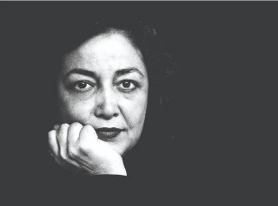
Shahrnush Parsipur, born in Tehran on 17 February 1946 of the Iranian calendar, was one of Iran’s most distinguished contemporary novelists. She was a pioneering and innovative writer who paid for her fidelity to freedom, truth, and intellectual independence with imprisonment, censorship, exile, loneliness, and the gradual wearing down of her life. Her life, like her works, became a symbol of resistance against the despotism of private property and patriarchy, the ideology of bondage, the denial of identity, inequality, and oblivion.
Parsipur neither placed her pen in the service of power, nor surrendered her thought to domination, nor carried literary creation into the marketplace as a commodity for exchange. She was among those contemporary Iranian writers who rose to international prominence and regarded intellectual independence not as an abstract slogan, but as her way of life. She paid the price for that choice under both political systems—monarchy and political Islam—through arrest, imprisonment, censorship, deprivation, exile, and the disregard of the human, material, and moral rights arising from her intellectual labor.
In the 1970s, at the height of her professional career and artistic maturity at National Iranian Radio and Television, she refused to remain silent over the executions of Keramat Daneshian and Khosrow Golsorkhi, two socialist activists whose prosecution was orchestrated by SAVAK under the supervision of its Internal Security chief, Parviz Sabeti, and whose death sentences were carried out by the Pahlavi Regime.
Regarding the executions as a violation of human conscience and human dignity, she submitted a formal letter of protest and resigned from television. As a consequence, her decision brought arrest, interrogation, threats, and deprivation. During the Pahlavi period, she was detained for approximately fifty-four days.
Afterward, she went to France to continue her studies, while also pursuing French and Chinese literature. In 1979, she returned to Iran to attend a memorial ceremony for her father. During that visit, she met Ahmad Shamlu (Iran’s most influential modern and avant-garde poet) and Manouchehr Hezarkhani (writer, translator, and literary critic) at the Iranian Writers’ Association. At that meeting, she entrusted her essay, “Reflections on the Book I Ching: The Culture of China Three Thousand Years Ago,” to Shamlu, who published it in Issue 24 of Ketab-e Jom’eh (The Friday Book), the literary weekly he edited.
In February 1980, amid military assaults, occupation, violent clashes, and executions in Kurdistan and Turkmen Sahra, and after consulting Ahmad Shamlu and Manouchehr Hezarkhani, she traveled to Kurdistan to prepare an investigative report. She spent several days in Mahabad and other cities and conducted what she later called a “sweet and simple conversation” with Sheik Ezzeddin Hosseini. Sheik Ezzedin Hosseini (1921–2011) was a Kurdish religious and political leader who spent his final years in exile and died in Sweden.
After her arrest, that interview was treated as evidence against her. After this month-long journey, she returned to France to continue her university studies. In 1980, she returned to Iran once again, hoping to resume her life and literary work there.
The Hope Did Not Last
Shahrnush was arrested in Tehran after the arrest of her mother, Fakhr-ol-Molouk Vala, and her brother. On 7 July 1981, while driving near Evin Prison, her mother was stopped in a sudden search. A box containing political publications, left in the car by Parsipur’s brother and sister-in-law for archival preservation, was found, and she was arrested. Several weeks later, on 13 August 1981, Shahrnush herself was taken to the same ward in Evin Prison where her mother, “Mrs Vala,” was being held.
Parsipur spent four years, seven months, and seven days in the prisons of the Islamic Republic, years in which hundreds were executed by firing squad or hanged each day. Her experiences later became the basis of Prison Memoirs, one of the most important prison narratives in contemporary Iranian literature.
After her release, she opened a small bookshop to make a living, but censorship, restrictions, and security and economic pressures persisted. At a time when Gholam-Ali Haddad-Adel—an executioner of culture, president of the “Academy of Persian Language and Literature”, and one of the senior figures of the ruling factions—had written to a number of writers and cultural figures inviting them to declare their willingness to cooperate with the Islamic Republic’s academy, Shahrnush Parsipur responded with remarkable courage. In response, she not only rejected his invitation, but openly declared her intellectual and political identity:
“I have spent years in prison without cause … Every month I must report to the committee and the Evin prosecutor’s office, and because of my nervous condition I am no longer capable of continuing this … My position is perfectly clear … I am a socialist, I believe in democracy, and I have an infinite hatred of compulsory hijab. I hope that he will make this clear to the prosecutorial authorities so that they will leave me alone.” —Prison Memoirs, Farsi, p. 377.
This statement perhaps reveals her worldview more fully than any analysis or interpretation. She was a writer who considered freedom indivisible and never dismounted from the untamed force of her womanhood to alter her convictions for security, fame, or commercial advantage.
Cultural Exploitation
If imprisonment, censorship, and interrogation awaited her in Iran, outside Iran she encountered another form of violence: a silent and exhausting violence which, in her own account, took the form of indifference toward writers’ rights and intellectual property. In this way, her struggle continued beyond national borders.
Across six decades, the fruits of her thought, research, writing, imprisonment, and exile created prestige, markets, and income for many others. Yet her own share was years of poverty, loneliness, exhaustion, and abandonment. She repeatedly spoke of the pain of seeing others exploit her literary creations without proper recognition of her material and moral rights.
During these same years, her novel Women Without Men inspired the film directed by Shirin Neshat. Parsipur’s participation in the project helped bring the work to a wider global audience. Her name shone in universities, festivals, and literary circles around the world, yet that international reputation could not provide security, peace, or a dignified life for the creator of one of the most important works of modern Iranian literature.
In the final years of her life, for the first time and in a calm yet deeply sorrowful voice, she appealed directly to society, as though reminding everyone of a truth both simple and bitter.
In March 2019, Shahrnush Parsipur posted a video asking readers of her work for assistance. She was living in housing designated for older people and could not live together with her son. She asked for financial help to purchase a home where she could live beside him. With bitterness, she asked:
“I think to myself: Why should a writer who has lived in this world for seventy-three years be so unfortunate that she cannot even buy a two-bedroom house? Why should I not be able to buy a two-bedroom house when my books have been translated into twenty-five or twenty-six languages around the world?”
Her words were more than a personal complaint and amounted to an ethical indictment of a culture that so often praises its writers and artists after death while leaving them to loneliness, poverty, and abandonment during their lives. In this way, her plea became a wider critique.
Throughout her years in exile, despite illness, financial hardship, and separation from the people and country she loved, Shahrnush Parsipur never ceased writing, corresponding with, and encouraging younger generations of writers in Iran. Her works were translated into numerous languages and became the subject of scholarly study and critical analysis at universities and research institutions worldwide. Her novels Touba and the Meaning of Night, Women Without Men, The Blue Intellect, The Dog and the Long Winter, together with her prison memoirs, secured her an enduring place in contemporary Persian literature and established her as one of Iran’s most original and influential women writers.
Her translations, in particular, opened a window onto the rich culture of China:
The Witchcraft of Salem Village — Shirley Jackson
Parapsychology
The Secrets of Divination: I Ching — Yves Thériault
From Confucius to the Long March — Delphine Dolors
A History of China — four volumes
Journey to the West
Lao Tzu and the Taoist Masters — Max Kaltenmark
Stories of the Men of Different Civilizations
The Rock of Tanios — Amin Maalouf
Yet the international stature of her work could not fill the void left by security, tranquillity, and support in her personal and creative life. Until the end, she remained above all an independent woman and writer—one who refused submission and would not surrender her human and woman-centered thought to political power, slavery ideology, or economic transactions.
Shahrnush Parsipur died alone in San Francisco on July 12, 2026, far from her community and from the many readers whose lives and minds had been enriched by her work.
Now, after her death, a familiar pattern has once again emerged: posthumous celebration. Universities, cultural institutions, literary associations, and Persian-language media have organized memorial ceremonies, issued tributes, and held conferences, lectures, and commemorative gatherings in her honor—honors that should have been bestowed during her lifetime. Worthy though these tributes are of her name and stature, they also confront our cultural conscience with a painful question: Why are so many of this country’s writers, artists, and thinkers denied even the most basic security, peace, support, and human solidarity while they are alive, only to be celebrated with great ceremony after their deaths?
Shahrnush was not merely the author of Women Without Men, but also a radiant presence in the darkness, determined to cast light upon its deepest shadows. Between two systems of political tyranny, she endured censorship, imprisonment, exile, and loneliness, yet preserved the fortifications of intellectual independence, human integrity, resistance, and refusal to submit. She showed that writing, when bound to freedom, conscience, and human dignity, is not merely a profession, but a way of life, a responsibility, and a moral commitment to truth.
Today, her works belong not only to the canon of contemporary Persian literature, but also to the historical memory, collective conscience, and enduring struggle of Iranian women for Woman, Life, Freedom, equality, and human dignity. Future generations will know Shahrnush Parsipur not only through the trials of her life, but through the enduring power of her novels and the remarkable body of work she left behind—works that dissolved the boundaries between realism, myth, history, and dream, giving voice to the lives of women in an Iran subjected to the violence and repression of one of the world’s most oppressive theocratic regimes, in a language at once original, poetic, and universal.
Shahrnush Parsipur has left us, but she has left behind a test for the culture of the world—a test whose answer must be sought not in ceremonies of commemoration, but in the way we treat living writers. The greatest praise and tribute to her is neither wreaths nor grandiose speeches and fashionable ceremonies. It is to read and learn from her works, to defend freedom of thought and the rights of writers, and to prevent the repetition of the fate that she and so many people of letters and integrity in this land endured.
May the exalted memory of Shahrnush Parsipur remain honored and everlasting.
Abbas Mansouran/19 July 2026


